How to Clean a Radiator: A Step-by-Step Guide for UK Homes
Chances are, you’ve already noticed the tell-tale signs that your radiator might need cleaning. You might have switched the heating on for the first chilly evening of autumn and got that burnt dust smell. Or your once-white radiator might have started to look more dishwater grey - yuck.
Yes, you want your radiator to look clean, but you want to make sure it is clean, too. Dust and debris can get trapped around the radiator fins and outer surfaces. If you block air from being able to travel through the bottom of the radiator, up past the fins and out the top, this will reduce the heat output of the radiator and affect the efficiency of your whole system (but more on that later).
In this guide, we’ll cover:
-
How to clean a radiator inside and out
-
What tools to use (as well as what not to use - yep, that's important, too)
-
How to clean different radiator types
-
When you might actually have a bigger problem
Why You Should Be Cleaning Your Radiator
We get it - your shelves, your carpet, your TV stand... these are all top cleaning priorities. Many of us don't even think about cleaning our radiators until the problem becomes dire. But here's why you actually need to be keeping on top of it.
The Thing About Efficiency
Sure, a dirty radiator looks a bit rubbish, but that's just the start of its problems. An unclean radiator can reduce heat output, especially on a panel radiator with convection fins, as a lot of the heat is coming from the convection process. (A quick note on the fins - they're there to increase surface area and help heat move into the room.)
Blocking air from being able to travel through the bottom of the radiator will reduce the heat output of the radiator. This will mean your room takes longer to warm up (or it might not be able to reach the desired temperature at all). Because of this, many homeowners end up increasing their boiler flow temperature to compensate, but this reduces the efficiency of the heating system.
But why does dust build up there in the first place?
Well, there's a simple reason for that.
The radiator warms the air around it, and the warm air rises. Cooler air gets drawn in from below, and that airflow pulls in loose dust with it. Over time, this dust settles inside the radiator and those hard-to-reach areas behind it.
Keeping the radiator clean, unobstructed, free from internal blockages or trapped air are all imperitive for optimal performance.
The Health Argument
Radiators can collect dust, pet hair, allergens and, in damp rooms, even mould spores. When the heating switches on, some of that debris gets pushed back into the air for the rest of the household to breathe it in. This is especially worth sorting if you’ve got children, pets, or anyone in the house who struggles with allergies.

What You'll Need to Clean a Radiator
The Tools You'll Need
You don’t need a van full of kit to get your radiator clean. For most jobs, the following tools are more than enough to make the cleaning process go as smoothly as possible:
-
Vacuum cleaner or hoover (with a brush attachment and a narrow nozzle attachment)
-
Flexible radiator brush (a long, bendable tool that can reach into the narrow gaps inside and behind radiators to get rid of dust)
-
Two microfiber cloths (one damp and one dry)
-
Soft sponge or lint-free cloth
-
Bucket of warm water (with a squeeze or two of washing-up liquid)
-
Dust sheet for the floor (old towels will also do!)
-
Hairdryer for stubborn dust
TOP TIP: Don't have a radiator brush handy? You can make one by fastening a microfiber cloth around a long stick with an elastic band. This way, you can get into the narrow gaps of the radiator.
What NOT to Use
The following things can actually do more harm than good.
-
Bleach – This can damage your radiator finish and create corrosion
-
Abrasive scourers or a wire wool – Again, these will damage your finish. They can scratch the surface of your radiator
-
Neat white vinegar – The acid can be harsh on mild steel finishes
-
Too much water – Yep, there's such a thing as too much. Don't go pouring soapy water down the back of your radiator
A Note on Vinegar: If you’re cleaning chrome, a diluted vinegar mix can actually help with limescale. On painted steel, use a damp cloth and mild soapy water only.
How to Clean a Radiator: Step-by-Step
These steps work for most standard panel radiators. For specific types (such as column radiators or electric towel rails), see the section below.
Step-by-Step Guide For a Fantastic External Clean
Step One
Turn off your heating! You want to switch off the boiler and leave the radiator you're planning to clean to cool for at least two hours. The whole unit should be completely cool before you start.
Step Two
Protect your floors by placing a dust sheet or some old towels beneath the radiator and along the skirting board. A lot more dust tends to come out than you might expect.
Step Three
Start by vacuuming your radiator. Gently suck up any loose dust from the front, top and sides of the radiator with the vacuum brush attachment. You also don't want to miss the pipes or the radiator valves, either. Once you're done with that, swap to the thin vacuum nozzle and use it to get into the grille slots and along the bottom edge of the radiator.
Step Four
Use a radiator brush for the fins. Slide the brush down through the top grille and work between the radiator fins from top to bottom. Move across section by section. Working methodically will pull out as much dust as possible (rather than just shifting it around).
Step Five
If you have dust that's trapped in tight spaces, here's where your hairdryer comes in handy. If dust is still clinging on, point a hairdryer down the back of the radiator or through the top grille. You want to blow it forward onto the dust sheet or towels, then hoover the dislodged dust up.
TOP TIP: Make sure your hairdryer is on the cold setting.
Step Six
Dip a clean microfibre cloth in a bucket of warm water with a little washing-up liquid and wipe the front panel, sides, top, pipes and valves. Make sure to wring it out well - you want to use a damp cloth, not a soaking one.
Step Seven
Take your dry cloth and gently wipe down your radiator again to remove soap residue. Drying your radiator after you've cleaned it will help stop rust marks and water spots from forming.
Step Eight
Don't neglect the wall behind your radiator! You'll want to give that some attention too, as dust often ends up coating the wall behind a radiator thanks to the airflow. So, while you’re there, give it a quick wipe too.
Our Top Tips For Cleaning Different Types of Radiators
Depending on your type of radiator, you might want to try different cleaning methods or tips.
Panel Radiators (With a Top Grille)
These are the most common radiators in UK homes. It's their top grille that makes them awkward.
Dust settles inside around the fins, but you can’t always see what you’re dealing with. That’s where a flexible radiator brush comes in handy. Feed it down carefully and work in straight passes.
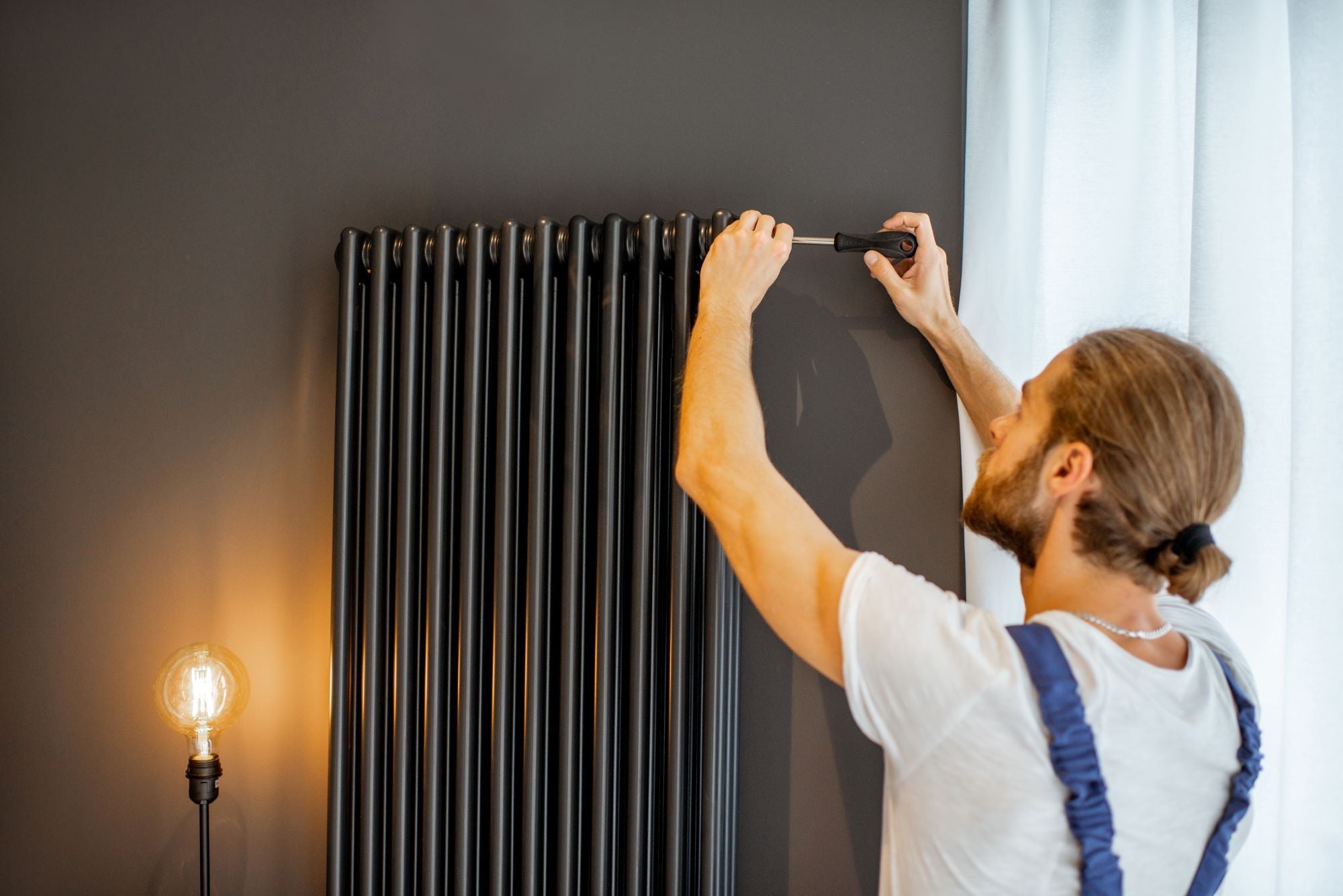
You may be able to remove some top grilles with gentle upward pressure. Others may need a screwdriver. Don’t force it. If it comes off easily, vacuum the fins directly, wipe the grille separately with warm soapy water, dry it, then clip it back on.
Column Radiators
A column radiator will often collect dust between the sections.
Use a long cloth, foam paint roller, or a radiator brush to work vertically between each column. If you notice grime in the joints, we recommend using an old toothbrush. Wipe each section with a damp soft cloth, then dry it properly so excess moisture doesn’t sit in the joints.
Towel Radiators
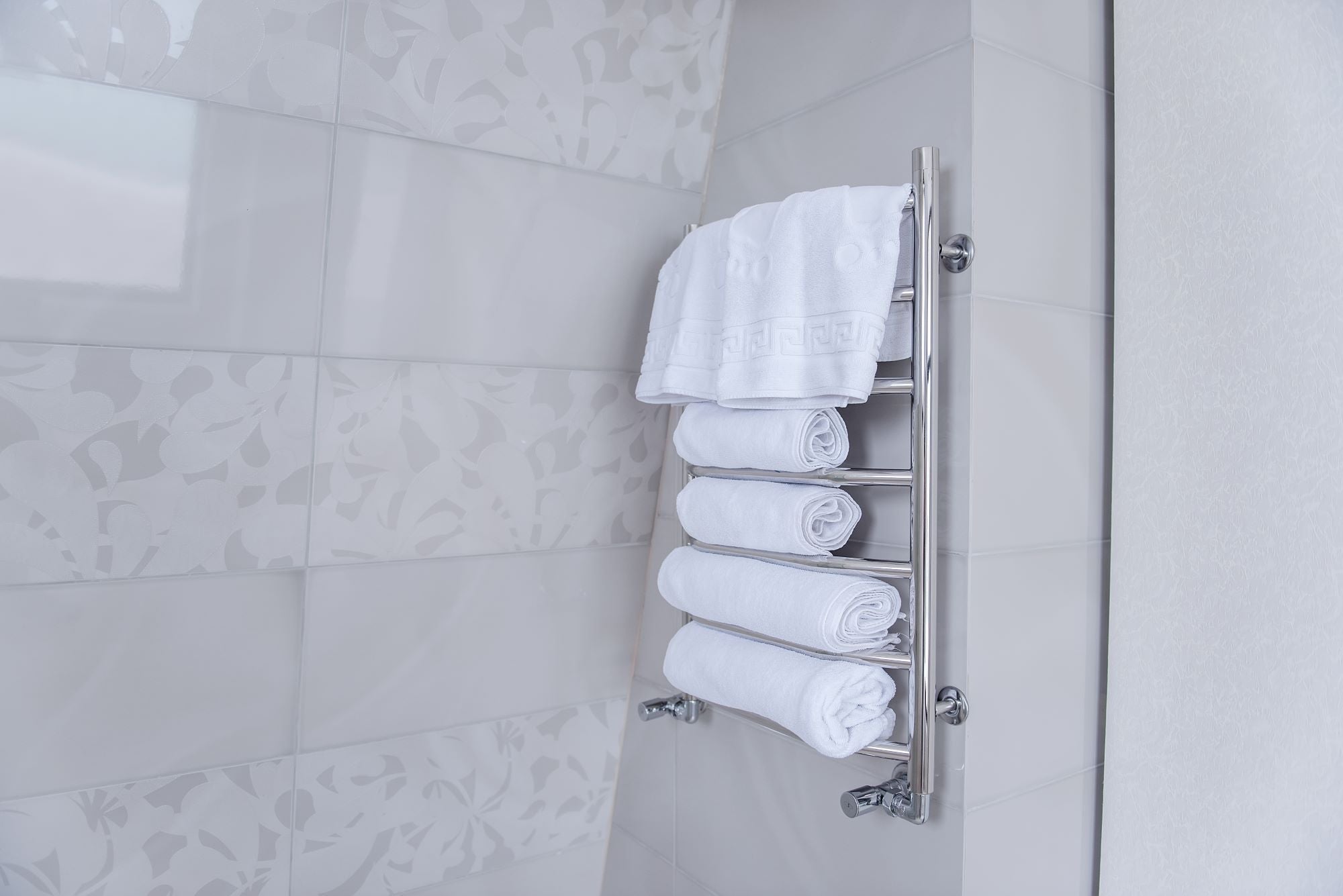
A towel radiator or towel rail is usually easier to clean, but the horizontal bars still catch fluff, bathroom dust and watermarks.
Run a damp cloth across each bar and around the joins. You can also use a hairdryer (on the cool setting) to clean dust out of awkward corners.
If you have a chrome towel radiator, try a 50:50 mix of water and white vinegar to get rid of limescale. Use a dry microfibre cloth to get rid of moisture so you don’t end up with marks.

Internal Cleaning: When You Need More Than a Dust-Over
So far, we’ve talked a lot about your radiator's surface, but what about the sludge, rust, dust, and debris lurking inside your system? That’s a different beast altogether.
Some Signs Your Radiator Might Need an Internal Clean
-
There are cold spots at the bottom of the radiator
-
Your radiator is making banging or gurgling noises
-
Your radiator takes ages to warm up
-
You're dealing with uneven heat from room to room
If your radiator's not working (despite looking clean on the outside) or you're dealing with noisy radiators, then you may need to take additional action, such as bleeding your radiator, checking to make sure the valves aren't stuck, balancing your system, or even checking the boiler pressure. When in doubt, we recommend calling a professional heating engineer, who will be able to get to the root of the problem as quickly and safely as possible.
When It Might Be Time to Upgrade Your Radiator
Sometimes, even a proper deep clean can’t make up for an old radiator that's in desperate need of an update. If your radiator is 15 to 20 years old, you might want to consider swapping your old contraption out for something a bit more modern.
Signs It's Time for a New Radiator
-
You're always dealing with cold spots, even after bleeding and flushing
-
There's visible corrosion, rust weeping or pinhole leaks
-
You get poor heat output
-
It still looks unclean (even after endless scrubbing)
What to Consider When Choosing a Replacement
-
Start with Heat Output & Size - You need the right-sized radiator for your space. If you have a radiator that's too small, it won't give you the heat you need to keep your home toasty. For that, you need to choose a radiator with the right heat output for your space. At UK Radiators, all our heat outputs are independently verified by a third party, so you can trust you're getting the heating you need. Use our BTU calculator to get started.
-
Consider Style - Gone are the days when all radiators looked the same. These days, radiators don’t have to be boring. Think about the style that suits your space best, whether that's a flat panel or designer radiator.
-
Think About Colour - White is a classic option if you want a traditional look, anthracite radiators look great in contemporary homes, and brass radiators can look stunning in period houses. The choice is yours!
Find both award-winning central heating radiators and electric options at UK Radiators.

FAQs
How Often Should You Clean a Radiator?
We recommend giving your radiator a light dust as part of your regular cleaning routine, then do a proper deep clean once or twice a year (or more often, if you notice a big build-up of dust). Early autumn is a fantastic time to clean your radiators, just before the heating goes back on daily.
How Do I Get Rid of Stubborn Stains?
Try leaving a little warm, mildly soapy water on the stain for a few minutes, then wipe with a soft microfibre cloth to get rid of any remaining marks. If it still won’t shift, a non-scratch cream cleaner or melamine sponge can help on small areas. This should remove dirt that's particularly stubborn.
Should I Turn Off the Heating Before Cleaning?
Yep, you should always turn your heating off before cleaning your radiator. There's an obvious reason for this - you don't want to burn yourself during the cleaning process.
Turn the heating off and wait until the radiator is cold before you start dusting and scrubbing.
Can You Put Vinegar in a Radiator to Clean It?
No! You should not pour vinegar or any other cleaning solution inside your radiator to clean it. You can, however, use it on chrome exteriors only - as long as you dilute it.
Don’t use neat vinegar on painted steel radiators.
Why Does My Radiator Smell When the Heating Comes On?
If you have a dusty or musty smell that appears when you first turn your heating on (after it's been switched off for a while), then this is commonly caused by dust, and cleaning it will usually do the job.
However, smells can also be caused by other issues, such as internal corrosion gases (eggy/sulphurous smell), sludge or bacterial growth (sewage-like smell), or overheated plastic (sharp chemical/plastic smell). In these cases, you may need to consult a professional to see what the problem is.
How Can I Get My Radiators White Again?
To get clean white radiators, we recommend using a soft cloth with warm water and mild washing-up liquid.
You may be tempted to reach for the bleach, but don't! Avoid harsh chemicals and anything abrasive, as this could ruin the finish of your radiator.
How Do I Know if My Radiator Needs Bleeding or Flushing?
If your radiator is cold to the touch at the top, then this usually points to trapped air. In this case, you'll likely have to bleed the radiator, where you release trapped air using a radiator key. This quick DIY job often fixes most cold spots at the top, and you don't need to bring in a professional to do it. Learn how to bleed a radiator with our comprehensive guide.
However, if your radiator is cold at the bottom, you might have a sludge problem, which means the system may need flushing. Flushing is a much bigger job than bleeding a radiator. A flush or powerflush removes sludge, rust and debris from the wider central heating system.
If you're not sure how to flush a radiator, we recommend calling in a professional heating engineer or a plumber.
Conclusion
Take it from us when we say a clean radiator is a better-working radiator. It looks nicer and helps keep your home feeling fresh rather than dusty. Cleaning a radiator doesn't take much, and all you need is the right tools and a bit of patience.
But if your radiator still looks tired, performs poorly, or just doesn’t work with your room's decor anymore, it may be time for an upgrade. UK Radiators has plenty of fantastic options to choose from.